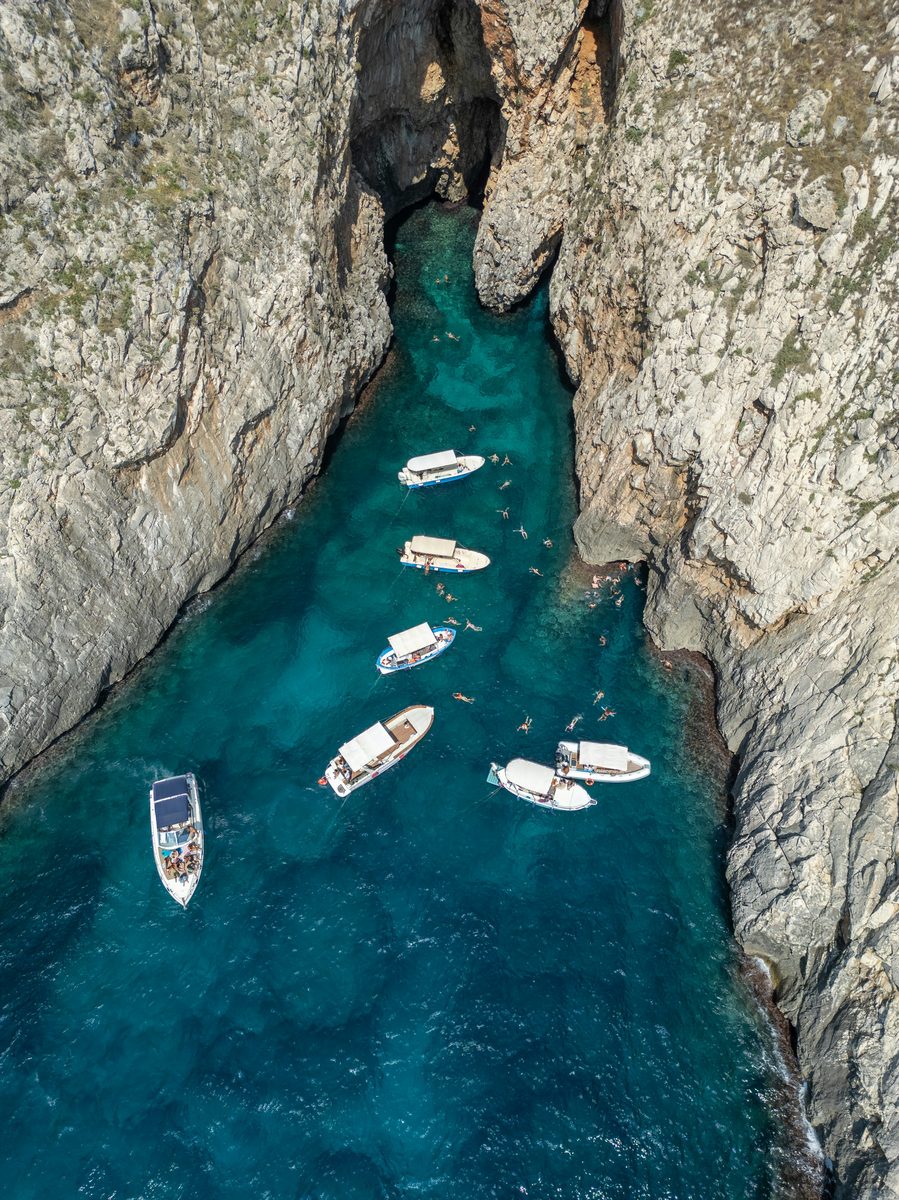
La péninsule salentine est étroite — une quarantaine de kilomètres en largeur. Depuis Villa Riccio Bianco, les deux côtes sont accessibles en moins de 30 minutes. Mais les deux mers sont fondamentalement différentes, et choisir la bonne en fonction de ses envies et de la météo est un art qui s'apprend.
Mer Ionienne
La côte calme · à l'ouest
Eaux turquoise et peu agitées
Fonds sableux, idéaux pour la baignade
Température plus élevée (27-28°C en été)
Couchers de soleil spectaculaires sur la mer
Plages de sable fin prédominantes
Salento historique et culturel
Mer Adriatique
La côte vivante · à l'est
Eaux d'un bleu plus profond et plus vives
Falaises calcaires et criques rocheuses
Légèrement plus fraîche (25-26°C)
Brise marine persistante, bienvenue en août
Idéale pour le snorkeling et la plongée
Plus sauvage et moins aménagée
La mer Ionienne — douceur et sérénité
C'est la mer de Villa Riccio Bianco. La côte ionienne du Salento est caractérisée par ses eaux remarquablement calmes — même par vent d'est, la péninsule protège cette façade des vagues. Le résultat : une mer presque toujours plate, d'une transparence cristalline, aux teintes allant du vert jade au turquoise profond.
Fin juillet et août, on nage dans 27 à 28°C — une sensation proche des Caraïbes. Les fonds sableux et doux en font une côte idéale pour une baignade sereine. Et chaque soir, le soleil qui plonge directement dans la mer depuis la terrasse — un spectacle que nos hôtes mentionnent systématiquement comme l'un des moments forts de leur séjour.
La mer Adriatique — caractère et profondeur
L'Adriatique a une tout autre personnalité. La côte est plus découpée, plus dramatique : des falaises calcaires blanches tombent directement dans une mer plus sombre. L'eau y est légèrement plus fraîche — une bénédiction en pleine canicule d'août. La brise de mer souffle plus régulièrement de ce côté.
Pour le snorkeling et la plongée, l'Adriatique n'a pas de rival. Les fonds rocheux de Roca Vecchia, Castro Marina et des environs d'Otranto abritent une faune marine remarquable : poulpes, murènes, gorgones, étoiles de mer. La clarté de l'eau permet des visibilités de 15 à 20 mètres par beau temps.
Choisir selon la météo
Vent d'ouest : La côte ionienne peut être agitée — préférez l'Adriatique.
Vent d'est : La côte adriatique peut être houleuse — restez côté ionien.
Sans vent : Idéal pour les deux. En août, l'Adriatique est plus agréable pour sa fraîcheur relative.
Notre verdict
Ne choisissez pas. La vraie magie du Salento, c'est précisément de pouvoir alterner. L'ionienne pour sa douceur et ses couchers de soleil sur l'eau, l'adriatique pour son caractère et ses paysages plus sauvages. Depuis Villa Riccio Bianco, vous avez accès aux deux — c'est une chance rare.
Programme idéal sur une semaine
J1 : Arrivée, baignade à Felloniche — mer ionienne, à 5 min à pied de la villa.
J2 : Journée Adriatique : Otranto le matin, Baia dei Turchi l'après-midi.
J3 : Punta Prosciutto ou Pescoluse côté ionien. Coucher de soleil depuis la terrasse.
J4 : Excursion en bateau depuis Leuca — grottes marines entre les deux mers.
J5 : Porto Selvaggio, réserve naturelle côté ionien, journée pique-nique.
J6 : Castro Marina côté adriatique : ville médiévale le matin, crique l'après-midi.
J7 : Dernier bain depuis les rochers de Felloniche au coucher du soleil.
The Salentine peninsula is narrow — about forty kilometres across. From Villa Riccio Bianco, both coastlines are within 30 minutes. But the two seas are fundamentally different, and choosing the right one according to your mood and the weather is an art worth mastering.
Ionian Sea
The calm coast · to the west
Turquoise, rarely rough waters
Sandy seabed, ideal for swimming
Higher temperature (27-28°C in summer)
Spectacular sunsets over the sea
Predominantly fine sandy beaches
Historical and cultural Salento
Adriatic Sea
The vibrant coast · to the east
Deeper, more vivid blue waters
Limestone cliffs and rocky coves
Slightly cooler (25-26°C)
Persistent sea breeze, welcome in August
Ideal for snorkelling and diving
Wilder and less developed
The Ionian Sea — gentleness and serenity
This is Villa Riccio Bianco's sea. The Ionian coastline is characterised by remarkably calm waters — even in an east wind, the peninsula shields this façade from waves. The result: an almost always flat sea, crystal clear, in shades ranging from jade green to deep turquoise.
In late July and August, you swim in 27 to 28°C — a feeling close to the Caribbean. The soft sandy seabed makes it an ideal coast for a serene swim. And every evening, the sun plunges directly into the sea from the terrace — a spectacle our guests invariably mention as one of the highlights of their stay.
The Adriatic Sea — character and depth
The Adriatic has a completely different personality. The coastline is more rugged, more dramatic: white limestone cliffs drop directly into a darker sea. The water is slightly cooler — a blessing in the August heat. The sea breeze blows more steadily on this side.
For snorkelling and diving, the Adriatic has no rival. The rocky seabed around Roca Vecchia, Castro Marina and Otranto shelters remarkable marine life: octopuses, moray eels, gorgonians, starfish. Water clarity allows visibility of 15 to 20 metres on a clear day.
Choosing by weather
West wind: The Ionian coast may be choppy — prefer the Adriatic.
East wind: The Adriatic may be rough — stay on the Ionian side.
No wind: Ideal for both. In August, the Adriatic is more pleasant for its relative coolness.
Our verdict
Don't choose. The real magic of Salento is precisely the ability to alternate. The Ionian for its gentleness and sunsets over the water, the Adriatic for its character and wilder scenery. From Villa Riccio Bianco, you have access to both — a rare privilege.
Ideal week itinerary
Day 1: Arrival, swim at Felloniche — Ionian Sea, 5 min walk from the villa.
Day 2: Adriatic day: Otranto in the morning, Baia dei Turchi in the afternoon.
Day 3: Punta Prosciutto or Pescoluse, Ionian side. Sunset from the terrace.
Day 4: Boat trip from Leuca — sea caves between the two seas.
Day 5: Porto Selvaggio nature reserve, Ionian side. Picnic day.
Day 6: Castro Marina, Adriatic: medieval town in the morning, cove in the afternoon.
Day 7: Last swim from the Felloniche rocks at sunset.
La penisola salentina è stretta — circa quaranta chilometri di larghezza. Da Villa Riccio Bianco, entrambe le coste sono raggiungibili in meno di 30 minuti. Ma i due mari sono fondamentalmente diversi, e scegliere quello giusto in base ai propri desideri e al tempo meteorologico è un'arte che si impara.
Mar Ionio
La costa tranquilla · a ovest
Acque turchesi e poco agitate
Fondali sabbiosi, ideali per nuotare
Temperatura più alta (27-28°C in estate)
Tramonti spettacolari sul mare
Spiagge di sabbia fine predominanti
Salento storico e culturale
Mare Adriatico
La costa vivace · a est
Acque di un blu più intenso e vivace
Scogliere calcaree e calette rocciose
Leggermente più fresco (25-26°C)
Brezza marina persistente, benvenuta in agosto
Ideale per lo snorkeling e le immersioni
Più selvaggio e meno attrezzato
Il Mar Ionio — dolcezza e serenità
È il mare di Villa Riccio Bianco. La costa ionica del Salento è caratterizzata da acque straordinariamente calme — anche con vento di levante, la penisola protegge questo lato dalle onde. Il risultato: un mare quasi sempre piatto, di cristallina trasparenza, con tonalità che vanno dal verde giada al turchese profondo.
A fine luglio e agosto si nuota a 27-28°C — una sensazione vicina ai Caraibi. I fondali sabbiosi e dolci ne fanno una costa ideale per una nuotata serena. E ogni sera, il sole che si tuffa direttamente nel mare dalla terrazza — uno spettacolo che i nostri ospiti citano sistematicamente come uno dei momenti più belli del loro soggiorno.
Il Mare Adriatico — carattere e profondità
L'Adriatico ha una personalità completamente diversa. La costa è più frastagliata, più drammatica: scogliere calcaree bianche cadono direttamente in un mare più scuro. L'acqua è leggermente più fresca — una benedizione in piena canicola di agosto. La brezza marina soffia più regolarmente da questo lato.
Per lo snorkeling e le immersioni, l'Adriatico non ha rivali. I fondali rocciosi di Roca Vecchia, Castro Marina e dintorni di Otranto ospitano una notevole fauna marina: polpi, murene, gorgonie, stelle marine. La chiarezza dell'acqua consente visibilità di 15-20 metri nelle giornate serene.
Scegliere in base al tempo
Vento di ponente: La costa ionica può essere agitata — preferite l'Adriatico.
Vento di levante: La costa adriatica può essere mosса — restate sul lato ionico.
Senza vento: Ideale per entrambe. In agosto, l'Adriatico è più piacevole per la sua relativa freschezza.
Il nostro verdetto
Non scegliete. La vera magia del Salento è proprio la possibilità di alternare. Lo Ionio per la sua dolcezza e i tramonti sull'acqua, l'Adriatico per il suo carattere e i paesaggi più selvaggi. Da Villa Riccio Bianco avete accesso a entrambi — un privilegio raro.
Programma ideale per una settimana
Giorno 1: Arrivo, bagno a Felloniche — Mar Ionio, a 5 min a piedi dalla villa.
Giorno 2: Giornata adriatica: Otranto la mattina, Baia dei Turchi il pomeriggio.
Giorno 3: Punta Prosciutto o Pescoluse lato ionico. Tramonto dalla terrazza.
Giorno 4: Escursione in barca da Leuca — grotte marine tra i due mari.
Giorno 5: Porto Selvaggio, riserva naturale lato ionico. Giornata pic-nic.
Giorno 6: Castro Marina, adriatico: città medievale la mattina, caletta il pomeriggio.
Giorno 7: Ultimo bagno dagli scogli di Felloniche al tramonto.
Die salentinische Halbinsel ist schmal — etwa vierzig Kilometer breit. Von der Villa Riccio Bianco aus sind beide Küsten in weniger als 30 Minuten erreichbar. Aber die beiden Meere sind grundlegend verschieden, und die richtige Wahl je nach Stimmung und Wetter zu treffen ist eine Kunst, die man lernt.
Ionisches Meer
Die ruhige Küste · im Westen
Türkisfarbenes, kaum bewegtes Wasser
Sandiger Meeresgrund, ideal für Kinder
Höhere Temperatur (27-28°C im Sommer)
Spektakuläre Sonnenuntergänge über dem Meer
Überwiegend Feinsandstrände
Historisches und kulturelles Salento
Adriatisches Meer
Die lebendige Küste · im Osten
Tieferes, lebhafteres Blau
Kalksteinklippen und Felsbuchten
Etwas kühler (25-26°C)
Beständige Meeresbrise, im August willkommen
Ideal zum Schnorcheln und Tauchen
Wilder und weniger ausgebaut
Das Ionische Meer — Sanftheit und Stille
Dies ist das Meer der Villa Riccio Bianco. Die ionische Küste des Salento zeichnet sich durch bemerkenswert ruhige Gewässer aus — selbst bei Ostwind schützt die Halbinsel diese Seite vor Wellen. Das Ergebnis: ein fast immer spiegelglattes Meer, kristallklar, in Farbtönen von Jadegrün bis tiefem Türkis.
Ende Juli und im August badet man in 27 bis 28°C — ein Gefühl, das an die Karibik erinnert. Der weiche Sandboden macht sie zur bevorzugten Küste für Familien mit Kindern. Und jeden Abend taucht die Sonne direkt ins Meer — ein Schauspiel, das unsere Gäste stets als einen der schönsten Momente ihres Aufenthalts nennen.
Das Adriatische Meer — Charakter und Tiefe
Die Adria hat eine völlig andere Persönlichkeit. Die Küste ist zerklüfteter, dramatischer: weiße Kalksteinklippen fallen direkt in ein dunkleres Meer. Das Wasser ist etwas kühler — im August-Hochsommer ein Segen. Die Meeresbrise weht auf dieser Seite beständiger.
Fürs Schnorcheln und Tauchen hat die Adria keine Konkurrenz. Der felsige Meeresgrund bei Roca Vecchia, Castro Marina und rund um Otranto beherbergt reiches Meeresleben: Tintenfische, Muränen, Gorgonien, Seesterne. Bei gutem Wetter ermöglicht die Wasserklarheit Sicht von 15 bis 20 Metern.
Auswahl nach Wetterlage
Westwind: Die ionische Küste kann unruhig sein — bevorzugen Sie die Adria.
Ostwind: Die adriatische Küste kann rauer sein — bleiben Sie auf der ionischen Seite.
Windstill: Ideal für beide. Im August ist die Adria wegen ihrer relativen Kühle angenehmer.
Unser Fazit
Wählen Sie nicht. Die wahre Magie des Salento liegt genau in der Möglichkeit, zu wechseln. Das Ionische Meer für seine Sanftheit und Sonnenuntergänge über dem Wasser, die Adria für ihren Charakter und die wildere Landschaft. Von der Villa Riccio Bianco aus haben Sie Zugang zu beiden — ein seltenes Privileg.
Ideales Wochenprogramm
Tag 1: Ankunft, Baden in Felloniche — Ionisches Meer, 5 Min. zu Fuß von der Villa.
Tag 2: Adriatischer Tag: Otranto am Morgen, Baia dei Turchi am Nachmittag.
Tag 3: Punta Prosciutto oder Pescoluse, ionische Seite. Sonnenuntergang von der Terrasse.
Tag 4: Bootsausflug von Leuca — Meereshöhlen zwischen den beiden Meeren.
Tag 5: Naturschutzgebiet Porto Selvaggio, ionische Seite. Picknicktag.
Tag 6: Castro Marina, Adria: mittelalterliche Stadt am Morgen, Bucht am Nachmittag.
Tag 7: Letztes Bad von den Felsen bei Felloniche beim Sonnenuntergang.
Explorer les deux mers du Salento depuis la villa ?